
Roomba 205 DustCompactor
Roomba 205 DustCompactor Review: 60 Days Without a Dock
SEO Title
Roomba 205 DustCompactor Review: 60 Days Without a Dock
Meta Description
Roomba 205 DustCompactor review: how the compaction bin works, tested battery and lab numbers, no-dock living, real downsides, and key alternatives.
Introduction
Every robot vacuum brand sells the same dream — and the same sculpture for your living room: a self-emptying tower that hoovers dirt out of the robot so you don’t have to. The iRobot Roomba 205 DustCompactor tries to deliver that convenience without the tower. It compacts debris inside its own bin with a motorized paddle, claims up to 60 days between empties, and charges on a dock so small it can tuck under furniture. For renters, apartment dwellers, and anyone who physically can’t spare the floor space for a base station, that’s a genuinely different pitch.
There are catches, though — more than a few. Independent lab tests rate the 205’s hardwood cleaning at the top of its class, but its battery, obstacle avoidance, and mopping all draw real criticism — and its own company’s budget sibling now beats it on value in at least one major publication’s leaderboard. Here’s what’s actually verified about the Roomba 205 DustCompactor, what it costs, and whether the no-dock trade-off makes sense for your home.
Honesty note: this review is assembled from published lab tests (CNET, PCMag), a published hands-on review (TechRadar), iRobot product pages and retailer listings, and our research file — not from hands-on testing of our own, which we don’t claim. Prices were checked on 2026-11-08 and change constantly; anything unverified is labeled “Not Verified.”
Product Overview
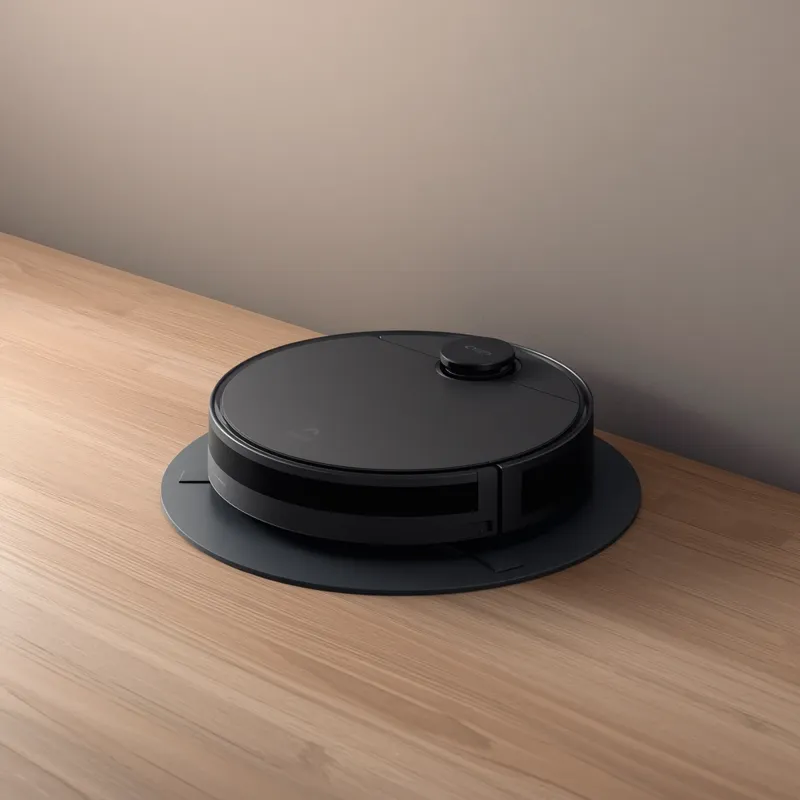
The headline feature is the name: DustCompactor. Inside the robot’s roughly 1.5-liter bin (a spec published in TechRadar’s hands-on review), a motorized plastic paddle swings back and forth during cleaning, pushing and compressing debris toward the back so the bin holds more than its volume suggests. iRobot’s claim is up to 60 days between manual emptyings — weeks of normal cleaning without touching the robot, versus a self-emptying dock that does it automatically but occupies a 14-inch-tall monolith in your room.
The 205 comes in two forms: a vacuum-only model and the 205 Combo, which adds a wet mop pad and a small water tank. PCMag’s review notes the vacuum-only $449 model otherwise matches the Combo’s specs (the Combo lists at $469.99). Both navigate with LiDAR, clean in systematic rows, and support scheduling and room targeting through the iRobot Home app. Both also charge on the same compact, charge-only pad — TechRadar measured the dock at roughly 3.5 × 5.9 × 5.3 inches, a fraction of any auto-empty station.
One piece of ownership context worth knowing: iRobot was acquired by 3i, a fact noted in ZDNet’s robot vacuum coverage (surfaced in our research, November 2026) — and, cuttingly, it’s a 3i-branded machine (the $250 3i G10 Plus) that CNET’s lab now names as the better budget value over the Roomba 205. iRobot is still shipping new models (PCMag’s editors note a carpet-sealing Roomba Max 875 in the pipeline), but parts, app support, and warranty service deserve a thought before any multi-year purchase.
Key Features
- DustCompactor bin — internal motorized paddle compacts debris in a ~1.5L bagless bin; iRobot claims up to 60 days between emptyings
- No auto-empty dock needed — charges on a compact pad (TechRadar measured ~3.5″ × 5.9″ × 5.3″), so no tower footprint in the room
- LiDAR navigation — maps and cleans in neat rows, works in low light, supports per-room targeting and schedules via the iRobot Home app
- Vacuum-only and Combo variants — choose basic vacuuming or add wet mopping with the 205 Combo
- Bagless system — no disposable dust bags to rebuy, ever (part of the pitch for budget-conscious buyers, per PCMag)
- Brush system — edge-sweeping brush plus a multi-surface brush roll for debris and hair (per iRobot’s product materials)
- App control — iRobot Home app (iOS, Android) with scheduling, room targeting, and cleaning history
- Multi-surface — hardwood, tile, and low-pile carpet (per product specifications)
- Compact robot body — 14.1″ × 14.09″ × 3.98″ (PCMag’s measured specs), able to fit under some low furniture
- 1-year limited warranty — per third-party review coverage of the product; verify current terms on iRobot’s page
Benefits
| Feature | What it means for you |
|---|---|
| DustCompactor + 60-day claim | You empty the bin on your schedule, weeks apart — not after every run like a conventional bin |
| Tiny charge-only dock | An apartment, upstairs landing, or crowded corner can host it — no floor-space sacrifice for a tower |
| Bagless | Zero ongoing bag purchases; nothing to reorder to keep the system working |
| LiDAR navigation | Consistent row cleaning and room-by-room scheduling; it finishes an area instead of wandering |
| Lab-verified hardwood performance | CNET’s lab measured 99.27% sand removal on hardwood — a top-tier result (tied best in its testing set) |
| Combo capability | One device vacuums and mops, so no second machine for light wet cleaning (with the performance caveats below) |
| App control | Start, schedule, and target cleans remotely; useful for pet-hair touch-ups while you’re out |
Pros and Cons
| Pros | Cons |
|---|---|
| Best-in-class hardwood cleaning — 99.27% sand pickup in CNET Labs testing | Tested battery life is short: PCMag measured 59 minutes; rivals run longer (the Roomba 105 series claims up to 120 minutes) |
| Genuinely solves the no-space problem — compact charge pad, no auto-empty tower | Carpet performance is unimpressive — PCMag calls pickup on carpet “mediocre” |
| Compactor works as advertised for reducing emptying frequency (reviewer consensus + buyer ratings) | Weak obstacle avoidance — CNET’s lab saw it dodge only 1 of 6 test objects; PCMag reports it got stuck during testing |
| No bags to rebuy — the bagless angle beats bagged self-empty docks on consumables | Mopping is basic: no auto water refill, no mopping customization options in the app (CNET) |
| LiDAR navigation maps and cleans in efficient rows | Third-party aggregation of buyer feedback includes recurring firmware and first-week mapping frustrations |
| Was CNET’s top value pick — deals have pushed the vacuum-only model to ~$150 | No longer CNET’s value pick: at ~$470 the 205 Combo is now runner-up to the $250 3i G10 Plus |
| Combo adds wet mopping for light jobs | Noisier than ideal — TechRadar lists max noise around 78 dB at 5 feet for the Combo |
Specifications
| Specification | Details |
|---|---|
| Model | iRobot Roomba 205 DustCompactor (Vac) / 205 DustCompactor Combo |
| Dust management | Onboard DustCompactor — motorized paddle compresses debris in the bin; bagless |
| Claimed emptying interval | Up to 60 days |
| Onboard bin | ~1.5 L (per TechRadar’s measurement of the Combo) |
| Navigation | LiDAR with systematic row cleaning; app maps and room targeting |
| Battery (tested) | 59 minutes (PCMag lab) |
| Dimensions (robot) | 14.1″ × 14.09″ × 3.98″ (PCMag); height ~4″ |
| Dock | Charge-only pad, ~3.5″ × 5.9″ × 5.3″ (TechRadar) — no auto-empty function |
| Surfaces | Hardwood, tile, low-pile carpet |
| Mopping | Combo only; fixed pad, no auto-refill, no app mopping settings (CNET) |
| App | iRobot Home (iOS, Android); scheduling, room targeting, voice assistant support |
| Noise | ~78 dB max at 5 ft (TechRadar measurement, Combo) |
| Warranty | 1-year limited (per third-party review coverage — verify current terms) |
| Price (checked 2026-11-08) | List: $469.99 Combo / $449 vacuum-only (PCMag). Street prices swing widely — CNET deal coverage has shown the vacuum-only model at $150 (25% off a ~$249 street price). Verify current pricing before buying |
| Launch | March 2025 (TechRadar) |
Who Should Buy It?
- Apartment dwellers without dock space — the entire point of the 205 is that it cleans for weeks without a tower; CNET and PCMag both frame it for small spaces
- Hard-floor homes — hardwood is where it tests best (99.27% sand removal, CNET Labs)
- Buyers who hate consumable bags — the bagless compactor means no recurring bag purchases, unlike bagged self-empty docks
- Upstairs/layout-limited homes — put the tiny charging pad where a full base station can’t go
- Deal hunters — when the vacuum-only model drops near $150–$200, its convenience-per-dollar math gets genuinely hard to beat
Who May Not Need It?
- Carpet-heavy homes — PCMag found carpet pickup mediocre; a self-emptying budget machine may serve you better
- Large homes and multi-room floors — 59 minutes of tested battery is short; a big single-floor home will see it return to recharge mid-job
- Anyone who wants full auto-emptying — the 205 never empties itself; if hands-off disposal matters most, the Roomba 105 + AutoEmpty dock self-empties into a sealed bag for up to 75 days (iRobot/Walmart listings)
- Serious mopping needs — the Combo’s mop is criticized as basic; a mop-focused robot or a dedicated robot mop is the honest answer
- Obstacle-course households — cords, socks, pet toys everywhere: with only 1-of-6 obstacle avoidance in CNET’s lab, you’ll either tidy the floor before runs or look elsewhere
- Anyone who wants the cheapest version of this idea — the 3i G10 Plus at ~$250 does the compression trick in a bagless 1L bin, per CNET
Alternatives
iRobot Roomba 105 (Vac / Combo, with or without AutoEmpty dock). The 205’s little sibling and the direct “vs” question buyers search. The 105 gives up the compactor, but it’s cheaper and offers a true self-empty option: the 105 Vac + AutoEmpty dock holds up to 75 days of debris in a bag (iRobot/Walmart listings), with claimed suction of 7,000 Pa and up to 120 minutes’ runtime (per figures in vacuums.reviews’ October 2026 coverage). iRobot’s own store showed aggressive sale pricing during our check (105 Combo at $169.99, reduced from $319.99) — very different money from the 205 Combo’s $469.99 list.
3i G10 Plus — around $250. CNET’s current budget champion and the machine that shares the 205’s core trick: a bagless 1L dustbin that uses dirt compression to reduce manual emptying, with 86.53% navigational coverage and 94.16% hardwood sand extraction in CNET’s lab. CNET flags its limits too — no self-emptying base station, pet hair pushed around on carpet, and a tall body that won’t clear low furniture. If you want the compactor concept for roughly half the 205 Combo’s list price and can accept those caveats, this is the sharpest comparison.
Shark PowerDetect NeverTouch Pro. For buyers who do have room for a full base station: CNET measured the same 99.27% hardwood sand removal (a three-way tie with the 205), praised its sanitizing base station and threshold climbing, but flagged poor obstacle avoidance (1 of 6 objects) and inconsistent low-pile pet hair removal. In other words: the 205’s cleaning results, plus a dock and consumables.
FAQ
How does the DustCompactor actually work?
A motorized plastic paddle inside the dustbin swings back and forth during and after cleaning runs, compacting collected debris toward the back of the bin so it takes up less space (TechRadar’s hands-on description). That’s what allows iRobot’s “up to 60 days without emptying” claim without any auto-empty dock — you still empty the bin manually, just far less often. Real-world results depend on floor type and debris volume; buyer feedback broadly confirms the compaction effect, with the usual caveat that dense pet hair and fine dust pack differently.
Do I still need a dock for the Roomba 205?
It needs a dock only to charge — and that’s a tiny pad, not a self-emptying station. There’s no automatic dirt disposal at all; the robot compacts debris onboard until you empty it. If automatic bin emptying is non-negotiable for you, you want a self-emptying model instead (see the Roomba 105 + AutoEmpty dock, rated for up to 75 days per iRobot’s listings).
Roomba 205 vs Roomba 105 — which should I get?
The 105 is the cheaper, simpler line: LiDAR navigation, claimed 7,000 Pa suction, up to 120 minutes claimed runtime, and an optional AutoEmpty dock that self-empties into a bag for up to 75 days (iRobot and Walmart listings; runtime/suction are manufacturer claims reported in vacuums.reviews’ October 2026 coverage). The 205 costs more but compacts debris bagless and posts stronger hardwood lab numbers (99.27%, CNET). Choose 105+AutoEmpty for maximum hands-off convenience with bags; choose 205 if you want no bags and no tower — ideally on a deal.
Is 59 minutes of battery really enough?
For a one-bedroom or apartment floor plan, usually yes — PCMag’s tested 59 minutes covers a small home in one or two runs. For a large house, no: PCMag rates the short battery among the 205’s main weaknesses, and it may need a recharge mid-clean, which stretches the job.
Is the Roomba 205 good for pet hair?
Mixed, honestly. Its strength is hard flooring, where CNET’s lab put it at the top of the class for sand pickup; PCMag rates carpet pickup as mediocre, and its lab testing found the robot got stuck. Third-party aggregation of owner feedback (vacuwiz.com’s review summary of 11,000+ ratings) flags recurring firmware and first-week mapping complaints — directional signal, not gospel. For heavy-shedding homes, compare pet-specific picks before committing, and keep the floor lightly tidied for obstacle avoidance.
Does the Combo version mop well?
No — and buyers should know that going in. PCMag rates its mopping performance poorly, and CNET notes there’s no auto water refill and no mopping-specific settings in the app. Treat the Combo’s mop as a light maintenance wipe for hard floors, not a replacement for a robot mop or a manual mopping routine.
Final Verdict
The Roomba 205 DustCompactor is the right idea executed with real trade-offs. If your home is mostly hard flooring, your floor-plan reality doesn’t include room for a self-emptying tower, and you can catch the vacuum-only model near its deal pricing, it’s a genuinely clever apartment machine with class-leading hardwood pickup and months-long emptying intervals. At full list price — and especially against the $250 3i G10 Plus that now outranks it on CNET’s value list — the math gets shakier: short battery, mediocre carpet pickup, and 1-of-6 obstacle avoidance are not small caveats. Buy the 205 for its space-saving trick and hardwood strength; skip it if you need carpet muscle, serious mopping, or big-home endurance. And check the current price before checkout — this is one of the most deal-volatile robots on the market, with street prices that have swung from ~$150 to $470 depending on model, variant, and month.
Relevant Internal Links
- Automatic cat feeder review — anchor: “automatic cat feeder” — placement: “Who Should Buy It?” — pet-tech households buying a vacuum for pet hair are the same audience automating feeding.
- Pet steam brush review — anchor: “pet steam brush” — placement: “FAQ” (pet hair question) — the grooming side of the same shedding problem.
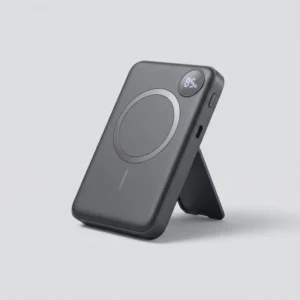
- Qi2 magnetic power bank review — anchor: “magnetic power bank” — placement: “Final Verdict” — same Technology & Gadgets category; a natural next read for gadget buyers.
Affiliate Disclosure
This article may contain affiliate links. If you buy through them, we may earn a commission at no extra cost to you.
Sources
All sources checked or surfaced on 2026-11-08 (US market). Prices change constantly — verify before publishing or buying.
- CNET — “Best Robot Vacuums We’ve Tested in 2026” (47 vacuums tested): https://www.cnet.com/home/kitchen-and-household/best-robot-vacuum-2/ (extracted 2026-11-08: Roomba 205 DustCompactor Combo scored 7.8 — formerly CNET’s top value pick, now runner-up to the $250 3i G10 Plus; best sand removal on hardwood at 99.27%; small robot and base station; mechanical paddle; cons: no auto refill water tank, no mopping settings, avoided only 1 of 6 objects; 3i G10 Plus data: $250, 86.53% coverage, 94.16% hardwood, bagless 1L compressing dustbin, no self-empty, pushes pet hair on carpet; Shark PowerDetect NeverTouch Pro: 99.27% hardwood tie, sanitizing base, poor avoidance, inconsistent low-pile pet hair).
- PCMag — “The Best Roomba Vacuum for 2026” (updated Sept 29, 2026): https://www.pcmag.com/picks/the-best-roomba (extracted 2026-11-08: Roomba 205 Combo $469.99, vacuum-only $449 matches specs; battery tested 59 minutes; dimensions 14.1 × 14.09 × 3.98 in; pros — compactor minimizes emptying, small base, capable particle pickup, efficient navigation; cons — short battery, got stuck in testing, poor mopping; framed for small spaces and bag-free convenience; Editors’ Choice TP-Link Tapo RV30 Max Plus $299.99).
- PCMag (UK) — Roomba 205 DustCompactor Combo spec page: https://uk.pcmag.com/robot-vacuums/158717/irobot-roomba-205-dustcompactor-combo-robot (search-surfaced 2026-11-08: confirms $469.99, 59-min tested battery, dims).
- TechRadar — “iRobot Roomba 205 DustCompactor Combo review: a crushing disappointment”: https://www.techradar.com/home/robot-vacuums/irobot-roomba-205-dustcompactor-combo-review (search-surfaced 2026-11-08: list $469.99, March 2025 launch, ~1.5L bin with motorized paddle, 78 dB at 5 ft, dock 3.5 × 5.9 × 5.3 in, robot height ~4 in, $170 discount noted at time of writing, critical verdict).
- CNET deals — “At $150, This Roomba Robot Vacuum Is Just $1 More Than Its Best-Ever Price”: https://www.cnet.com/deals/irobot-roomba-205-dustcompactor-robot-vacuum-deal/ (search-surfaced 2026-11-08: vacuum-only 205 at $150, 25% off a “usual $249”, Best Buy matching).
- vacuums.reviews — “iRobot Roomba 105 Combo review” (Oct 2026): https://vacuums.reviews/reviews/irobot-roomba-105-combo-review (search-surfaced 2026-11-08: 105 Combo regular $319.99 on Oct 12, 2026; 7,000 Pa claimed suction; up to 120-min claimed runtime; 400ml combo bin; 5-year consumables costs; AutoEmpty variants at $469.99).
- iRobot official store — Roomba 105 Vac + AutoEmpty Dock page: https://www.irobot.com/en_US/roomba-105-vac-robot-plus-autoempty-dock/Q352020.html (search-surfaced 2026-11-08: up to 75 days self-emptying; sale listing 105 Combo $169.99 reduced from $319.99).
- Walmart — Roomba 105 listings (search-surfaced 2026-11-08): 105 Vac $179.99 (was $299.99) at https://www.walmart.com/ip/15693016874; 105 Vac + AutoEmpty $449, 75-day self-empty, 200-min battery figure at https://www.walmart.com/ip/16203350360.
- vacuwiz — “iRobot Roomba 205 DustCompactor Review: 60-Day Test” aggregation: https://vacuwiz.com/reviews/irobot-roomba-205-dustcompactor-review (search-surfaced 2026-11-08: $249.95 typical price, ~11,563 ratings, recurring first-week mapping/firmware complaints, 1-year warranty, LiDAR, 60-day claim — third-party aggregation, directional only).
- ZDNet — robot vacuum coverage noting iRobot’s acquisition by 3i (surfaced via our research file, 2026-11-08).
- Project research file: /home/ai-agent/livelihood-ops/research/us-products-20261108/MASTER-30-products-US-2026-11-08.md (Category 1, row 9) and category-1-gadgets.md — trend evidence, keyword set (all keywords above are verbatim autocomplete strings harvested 2026-11-08), competitor audit.
Verification note: no hands-on testing was performed or claimed. Lab figures are attributed to CNET Labs and PCMag; hands-on observations to TechRadar; manufacturer claims (60-day emptying, suction, runtime) are labeled as such. Street prices for this model have moved sharply and are labeled with capture dates.
Internal links
- Target:
/automatic-cat-feeder/— anchor: “automatic cat feeder review” — placement: “Who Should Buy It?” — why: pet-owning smart-home buyers overlap; both posts target the “automate the pet chores” research journey. - Target:
/pet-steam-brush/— anchor: “pet steam brush review” — placement: “FAQ” — why: the pet-hair question in the FAQ naturally hands off to grooming content. - Target:
/qi2-power-bank/— anchor: “Qi2 magnetic power bank review” — placement: “Final Verdict” — why: same Technology & Gadgets category, gadget-buyer audience crossover.
Reviews
There are no reviews yet.